Mission Lab Description Director Staff Research Network Research Capabilities
Research Services Ongoing Research Recent Publications Recent Presentations Contact Information


Mission
 

The Exercise & Sport Nutrition Laboratory (ESNL) in the Department of Health and Kinesiology (HLKN) at Texas A&M University is dedicated to evaluating the interaction between exercise and nutrition on health, disease, and human performance.   Moreover, to help disseminate research findings to the scientific and lay communities through research presentations, publications, media interviews, and individual and group counseling. 


Lab Description


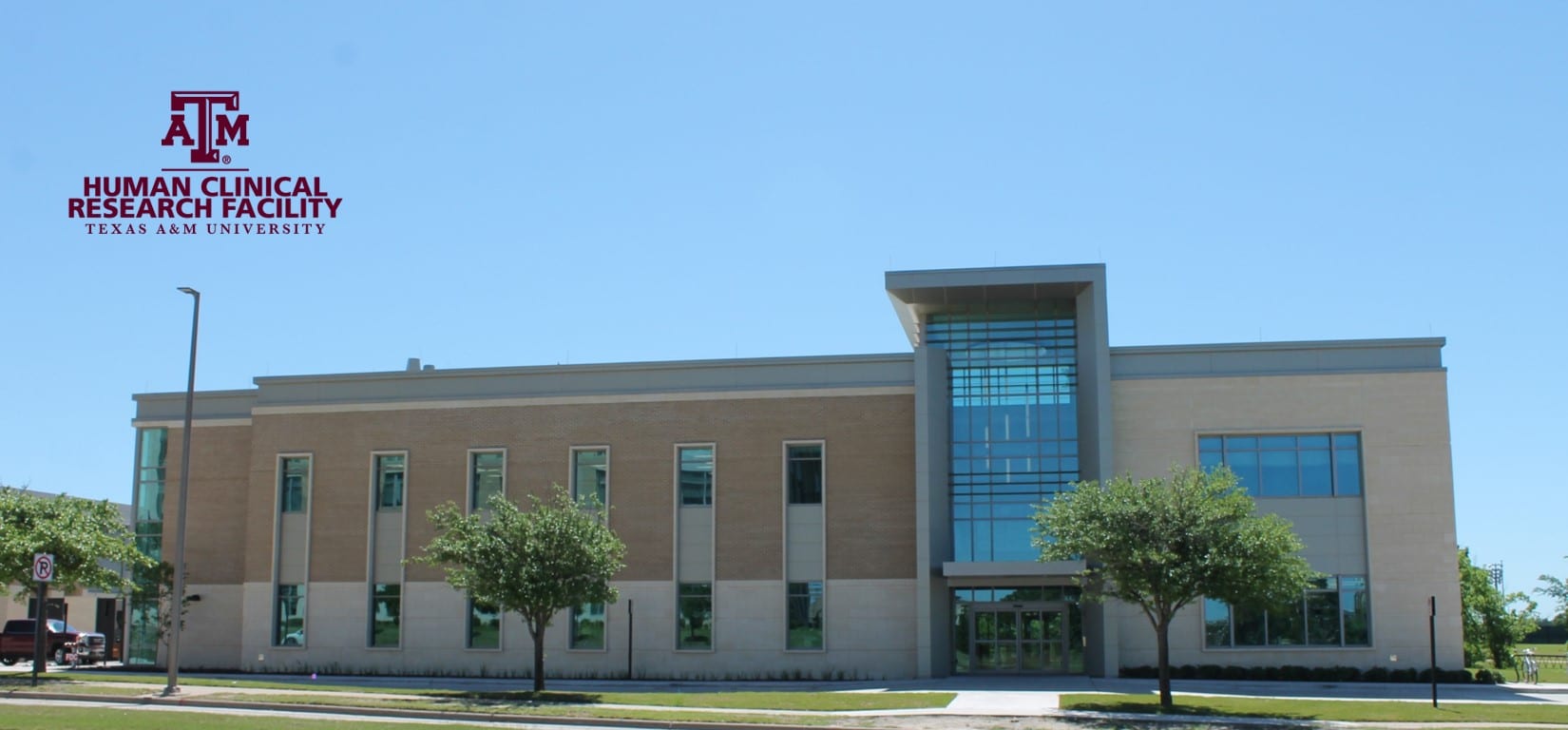
The ESNL was founded by Dr. Richard Kreider while he was a faculty member in the Department of Human Movement Sciences & Education at the University of Memphis in 1998.   In the summer of 2002, the ESNL and staff moved with Dr. Kreider to Baylor University where he served as Professor and Chair of the Department of Health, Human Performance, and Recreation.  After 6 years of highly successful leadership as Chair,  Director of the Exercise & Sport Nutrition Lab; Director of the Center for Exercise, Nutrition, and Preventive Health Research; and founder and Director of the doctoral program in Exercise, Nutrition, and Preventive Health, Dr. Kreider moved to Texas A&M University where he was named Head of the Department of Health and Kinesiology and Thomas A. and Joan Read Endowed Chair for Disadvantaged Youth.  This also involved moving the ESNL, staff, funding, and a number of doctoral students to Texas A&M.  The ESNL is located in a 5,500 sq. ft. facility in Building Two of the Research Park (Suite 2500) at Texas A&M University.  Plans are being discussed to house the ESNL and other HLKN biomedical and behavioral researchers in a new 25,000 sq. ft. comprehensive biomedical and behavioral research facility.         


The ESNL was developed in collaboration with MetaResponse Sciences, Inc. of Laguna Nigel, California.  The ESNL consists of a training center, a patient/subject reception area, a stress testing area, a medical exam area, a body composition/bone density assessment area, a phlebotomy/muscle biopsy area, a resting energy expenditure study area, an isotonic and isokinetic strength testing area, an anaerobic capacity analysis area, work stations for nutrition/data analysis, and wet labs for biochemical analyses of muscle, blood, and/or urine samples.   Additional areas include workspace for research assistants, data analysis, and a Curves training area.   As the new site for the ESNL is developed, wet and dry lab space will also be provided for HLKN faculty members to support their research and enhance collaboration.    


Director


Richard B. Kreider, PhD, FACSM, FISSN, MX
Professor & Head, Department of Health & Kinesiology
Thomas A. and Joan Read Endowed Chair for Disadvantaged Youth

Director, Exercise & Sport Nutrition Lab


Staff


Chris Rasmussen, MS, MX, CSCS, EPC (Lab Coordinator)
 

Medical Supervisors


J.P. Bramhall, MD

Research Assistants

  • Mike Byrd, MSEd, MBA, LPTA, HFI, NASM-CPT

  • Julie Culbertson, MS

  • Claire Canon, MS

  • Ryan Dalton, MS

  • Justin Dobson, MS

  • Peter Jung, MS

  • Deepesh Khanna, MD

  • Han Kyul Kim, BS

  • Majid Koozehchian, MS

  • Brittanie Lockard, MS

  • Major Michelle Mardock, MS, RD

  • Jonathan Oliver, MEd

  • Sunday Simbo, MS

Research Network

Research Capabilities  

  • Anaerobic Capacity Testing

  • Blood Assessment (clinical chemistries, hormone analyses, immune analyses, gene expression)

  • Blood Collection (finger stick, venipuncture, indwelling catheters)

  • Body Composition Assessment

  • Bone Density Assessment

  • Cardiopulmonary/ECG Exercise Testing

  • Endurance Performance Testing

  • Exercise Training Facilities (on or off site)

  • Food Taste Testing (TAMU Institute for Obesity)

  • Muscle Biopsies (fiber diameter, substrates, muscle proteins, etc)

  • Nutrition Analysis           

  • Resting Energy Expenditure

  • Strength Testing (Isokinetic & Isotonic)

  • Total Body Water Assessment (BIA)

Research Services  

  • Consult with potential grant sponsors on research design and methodology. 

  • Conduct fee for service exploratory/pilot studies and/or full-scale clinical research trials at the ESNL or in collaboration with researchers who participate in the ESNL research network.

  • Provide expeditious data analysis, interpretation, and presentation of results.

  • Publish research findings in peer-reviewed scientific publications.

  • Assist in translating research findings to the media and public.


Ongoing or Recent Research Studies

  • Curves Women's Health & Fitness Initiative.  R. Kreider (PI).

  • Effects of the Curves for Women® Fitness and Weight Loss Program on Body Composition, Metabolism, and Exercise Capacity in Sedentary Overweight Females (Funded by Curves International).  R. Kreider (PI).  C. Rasmussen and C. Kerksick study coordinators.

  • Effects of the Curves for Women® Fitness and Weight Loss Program on Body Composition, Metabolism, and Exercise Capacity in Sedentary Overweight Females with Special Populations (Funded by Curves International).  R. Kreider (PI).  R. Li study coordinator.

  • Effects of the Curves for Women® Fitness and Weight Loss Program on Body Composition, Metabolism, and Exercise Capacity in Sedentary Overweight Elderly Females (Funded by Curves International).  R. Kreider (PI).  M. Galbreath study coordinator.

  • Analysis of Exercise Intensity and Energy Expenditure of Highly-Trained Women Participating in the Curves Exercise Program. (Funded by Curves International).  R. Kreider (PI).  R. Farris and J. Moreillon study coordinators.

  • Effects of the Curves for Women® Fitness and 30/30 Weight Loss Program on Body Composition, Metabolism, and Exercise Capacity in Sedentary Overweight Females

  • Analysis of Computerized and Non-Computerized Resistance Training Equipment on Fitness and Health Outcomes.  (Funded by Curves International).  R. Kreider (PI).  R. Farris and J. Moreillon study coordinators.

  • Effects of the Curves Fitness and Weight Loss Program in Curves Members (Avon/Curves Weight Loss Challenge; Web-based Analysis of Health Outcomes in Curves Members).  (Funded by Curves International).  R. Kreider (PI).

  • Effects of Different Forms of Creatine Supplementation During Training on Muscle Hypertrophy and Creatine Transport Mechanisms.   (Funded by the EBNL and ESNL).  D. Willoughby (PI). R. Schoch & M Spillane study coordinators. 

  • Impact of Acute and Chronic CoEnzyme Q10 Supplementation on Exercise Performance. (Funded by Pharma Base N.A., Inc.)  R. Kreider (PI).  M. Cooke & M. Iosia study coordinators.

  • Effects of AX-4 Supplementation on Weight Loss in Overweight Men and Women.  (Funded by Ambryx Biotechnology, Inc.).  R. Kreider (PI).  M. Iosia & M. Cooke study coordinators.

  • Effects of Two Diet Strategies on Weight Loss and Markers of Health in Overweight Women.  (Funded General Mills Bell Institute of Health).  R. Kreider (PI).  K. Beavers & M. Serra study coordinators.

  • Effects of the Curves 30/30 Weight Loss Program on Long-Term Weight Loss and Maintenance.  (Funded by Curves International).  R. Kreider (PI).  J. Culbertson study coordinator.

  • Effects of a Short-Term National Fitness Initiative on Health and Fitness Outcomes.  (Funded by Curves International).  R. Kreider (PI).

  • Curves Women's Health & Fitness Initiative Health Surveillance Program.  (Funded by Curves International).  R. Kreider (PI).

Recent Publications


Recent Presentations


Contact Information:
 

Richard B. Kreider, PhD, FACSM, FISSN, MX
Exercise & Sport Nutrition Laboratory

Two Research Park Building

1700 Research Parkway

Suite 2500

College Station, Texas  77843

979-845-1333